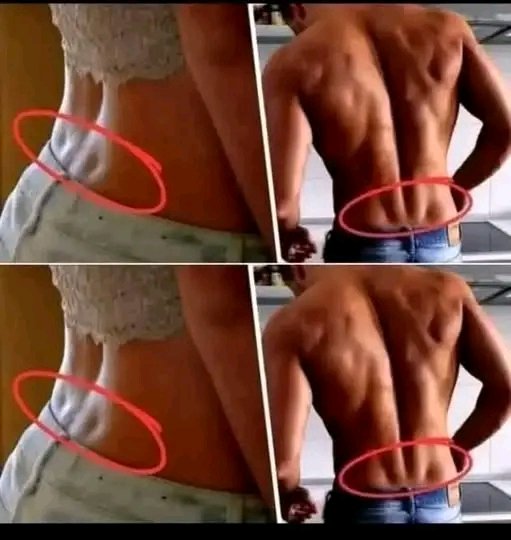
If You See These Two Holes on a Woman’s Back, Here’s What It Means…

Those two small, symmetrical indentations on a woman’s lower back—just above the hips—often spark curiosity and myths. Some people think they’re mysterious, others believe they signal something special. In reality, these natural features have a clear anatomical explanation and a few interesting associations.
They are commonly known as “Dimples of Venus.” Medically, they’re called back dimples or sacroiliac dimples. They appear where the skin is naturally tethered to the underlying pelvic bones, specifically near the posterior superior iliac spine. Because the skin is attached more tightly at these points, small indentations form.
They’re Genetic, Not Created These dimples are entirely genetic. You’re either born with them or you’re not. Exercise, posture, or weight changes don’t create them—though they may become more visible with lower body fat. If they run in families, that’s because bone structure and connective tissue patterns are inherited.
What They Say About Health Dimples of Venus are generally considered a normal anatomical variation and are not a sign of disease. In fact, some studies suggest that people with these dimples may have good circulation in the pelvic area because there’s less muscle mass covering those points. This is an association, not a diagnosis—but it helps explain why they’re often visible in otherwise healthy individuals.
Are They Linked to Pain or Problems? In most cases, no. These dimples are harmless and not related to back pain or spinal issues. However, if someone experiences pain directly in that area, it’s usually due to muscle strain, posture, or sacroiliac joint stress—not the dimples themselves.
Why Are They Surrounded by Myths? Cultural myths have long surrounded Dimples of Venus. Some traditions associate them with beauty, balance, or vitality. Others mistakenly link them to personality traits. Scientifically, they’re simply a result of how the body is built—nothing more, nothing less.
Do Men Have Them Too? Yes, men can have similar indentations, often called Dimples of Apollo. The difference in naming comes from classical art and mythology, not biology.

Final Thought Those two small holes on a woman’s back are a natural, genetic feature—no hidden meaning, no health warning, and no mystery once you understand the anatomy. They’re simply one of the many ways the human body shows its natural diversity.