The Little Bow on Women’s Panties: More Than Just a Pretty Detail
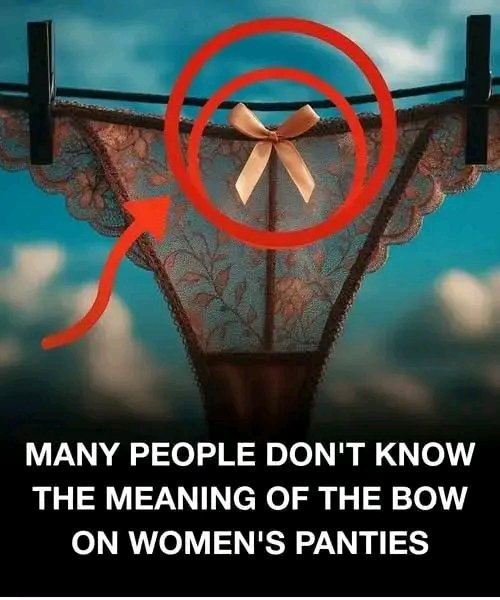
At first glance, the small bow stitched onto the front of many women’s panties seems purely decorative—cute, feminine, and easy to overlook. Yet this tiny detail has a surprisingly practical and historical background that goes far beyond fashion. Long before elastic waistbands and modern manufacturing, the bow actually served an important purpose.
Historically, underwear wasn’t designed with stretchy materials. Early women’s undergarments were held in place using ribbons or strings threaded through the waistband. The bow marked the spot where the garment was tied, usually at the front, making it easier to secure and adjust. In dimly lit rooms—long before electricity—this small knot helped women quickly identify the front of their underwear while dressing.
As elastic became standard and the functional need for a tie disappeared, the bow remained. Why? Because it evolved into a visual cue. Even today, the bow subtly indicates the front of the garment, helping wearers orient it correctly without much thought. It’s a small but helpful design feature that many people unconsciously rely on.
Beyond practicality, the bow also plays a psychological and aesthetic role. Lingerie designers often use it to add softness and balance to the garment. The bow draws the eye to the center, creating symmetry and reinforcing traditional ideas of femininity, delicacy, and charm. For many brands, it has become a signature detail that communicates comfort and approachability rather than overt sensuality.
There’s also a cultural aspect. Over time, consumers came to associate the bow with familiarity and reassurance. It signals that the underwear is meant for everyday wear—comfortable, gentle, and non-intimidating. This is why bows are more common on classic briefs, bikinis, and cotton underwear, while minimalist or high-fashion lingerie often omits them entirely.
Interestingly, some modern designers have begun intentionally removing the bow as a statement, reflecting changing attitudes toward gender norms and personal expression. Still, its continued presence in mainstream underwear shows how deeply ingrained this small detail has become in clothing design.
What’s remarkable is how such a tiny feature carries layers of meaning—historical, functional, emotional, and aesthetic—all stitched into a single thread. The little bow is a reminder that fashion isn’t just about appearance. Even the smallest details often have stories rooted in practicality and tradition.
So the next time you notice that tiny bow, remember: it’s not just decoration. It’s a quiet nod to history, comfort, and thoughtful design that has stood the test of time.

