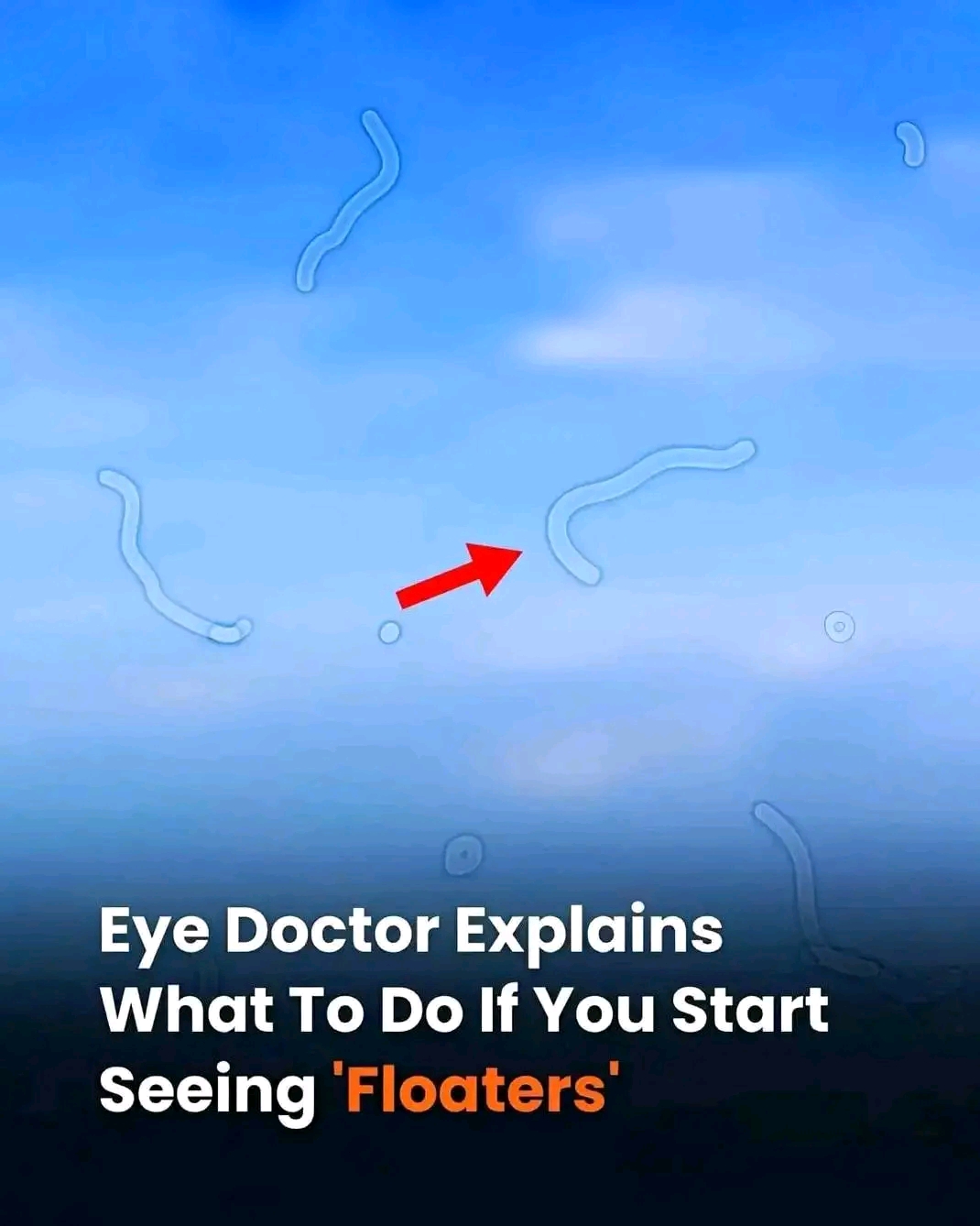
You’re looking at your phone, the sky, or a white wall… and suddenly you notice tiny threads, dots, or cobweb-like shadows drifting across your vision. You blink — they move. You try to focus — they slide away.
Most people think their eyes are just tired.
But ophthalmologists say these “floaters” can sometimes be your eye sending an early warning signal.
What Are Floaters Actually?
Inside your eye there’s a clear gel called the vitreous.
As we age, this gel slowly shrinks and becomes more liquid.
Tiny fibers clump together and cast shadows on the retina — and your brain sees them as:
Black dots
Transparent worms
Spider-web shapes
Moving specks
They’re especially visible when looking at bright backgrounds like the sky or a screen.
Why They Suddenly Appear
The most common reason is normal aging of the eye (usually after 30–40).
But floaters can also show up earlier due to:
Long hours on screens
Nearsightedness (very common)
Dehydration
Eye strain
After fever or illness
In many people, they fade as the brain learns to ignore them.
The Dangerous Signs Doctors Take Seriously
Here is the important part — not all floaters are harmless.
Seek urgent eye check if you notice:
A sudden shower of many floaters at once
Flashes of light like lightning in the corner of vision
A dark curtain or shadow from one side
Blurred or missing vision areas
These may indicate a retinal tear or detachment — a condition where quick treatment can save eyesight.
What You Should Do Immediately
Do not rub your eyes
Rest from screens for a few hours
Drink water (dehydration worsens visibility)
Observe if number increases within 24 hours
If they appeared suddenly or keep multiplying → visit an eye specialist the same day.
Can Floaters Be Removed?

Most require no treatment.
Your brain adapts within weeks.
In severe cases doctors may use: Laser therapy
Vitrectomy surgery (rare)
But these are only used when vision is heavily disturbed.
The Bottom Line
Floaters are common — but sudden changes are not normal.
Your eyes rarely give warnings… and floaters are one of the few times they do.
If your vision ever feels different overnight, it’s safer to check early than regret later.