1 Month Before a Heart Attack: Your Body Sends These Silent Warnings
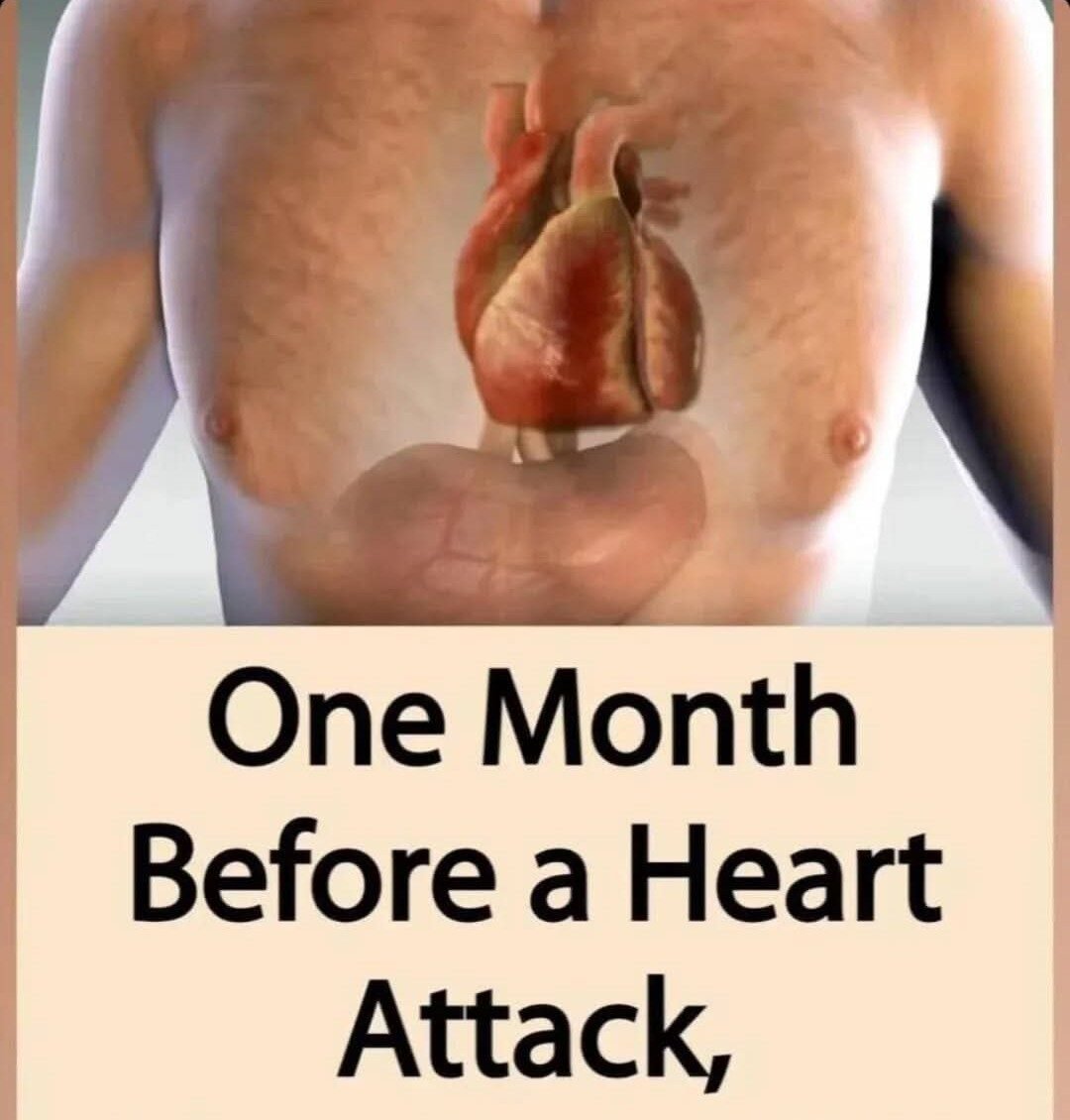
A heart attack rarely happens without warning. In many cases, the body starts sending clear but subtle signals weeks in advance, often about a month before the event. The danger is that most people ignore these signs or confuse them with stress, aging, or minor health issues. Recognizing these early warnings could save your life or the life of someone you love.
One of the most common early signs is unusual fatigue. This is not normal tiredness after a long day. People often describe it as extreme exhaustion after simple activities like walking, showering, or climbing a few stairs. This happens because the heart is struggling to pump enough oxygen-rich blood to the body.
Another warning sign is shortness of breath, even without exertion. You may feel like you can’t take a deep breath, especially when lying down or during light movement. This can occur weeks before a heart attack as blood flow to the heart becomes restricted.
Chest discomfort doesn’t always feel like sharp pain. Many people experience pressure, tightness, burning, or a heavy feeling in the chest that comes and goes. Because it’s not severe at first, it’s often ignored. Some mistake it for indigestion or acid reflux.
Sleep disturbances are also common. Trouble falling asleep, waking up gasping for air, or sudden anxiety at night can be linked to reduced heart function. Poor circulation affects oxygen delivery during sleep, triggering restlessness.
You may also notice pain spreading to other areas, such as the left arm, shoulder, neck, jaw, upper back, or even teeth. This pain can be mild, dull, or aching and may appear and disappear over days or weeks.
Digestive symptoms like nausea, bloating, stomach pain, or unexplained indigestion can also be early heart attack signs, especially in women. Because these symptoms seem unrelated to the heart, they are frequently overlooked.
Another critical sign is dizziness or lightheadedness. Reduced blood flow to the brain can cause sudden weakness, balance problems, or fainting sensations.
Some people experience cold sweats, clammy skin, or excessive sweating without physical effort. This happens when the body goes into stress mode due to heart strain.
Anxiety or a sense of impending doom is a surprising but real symptom. Many heart attack survivors report feeling something was “very wrong” weeks before their attack, even without obvious pain.
Lastly, swelling in the legs, ankles, or feet may appear as the heart becomes less efficient at pumping blood, causing fluid buildup.
Final Warning
If you notice several of these signs together—especially fatigue, chest discomfort, shortness of breath, or arm/jaw pain—do not ignore them. Seek medical attention immediately. Early testing and treatment can prevent a heart attack entirely.
Your heart whispers before it screams. Listening in time can save your life.

