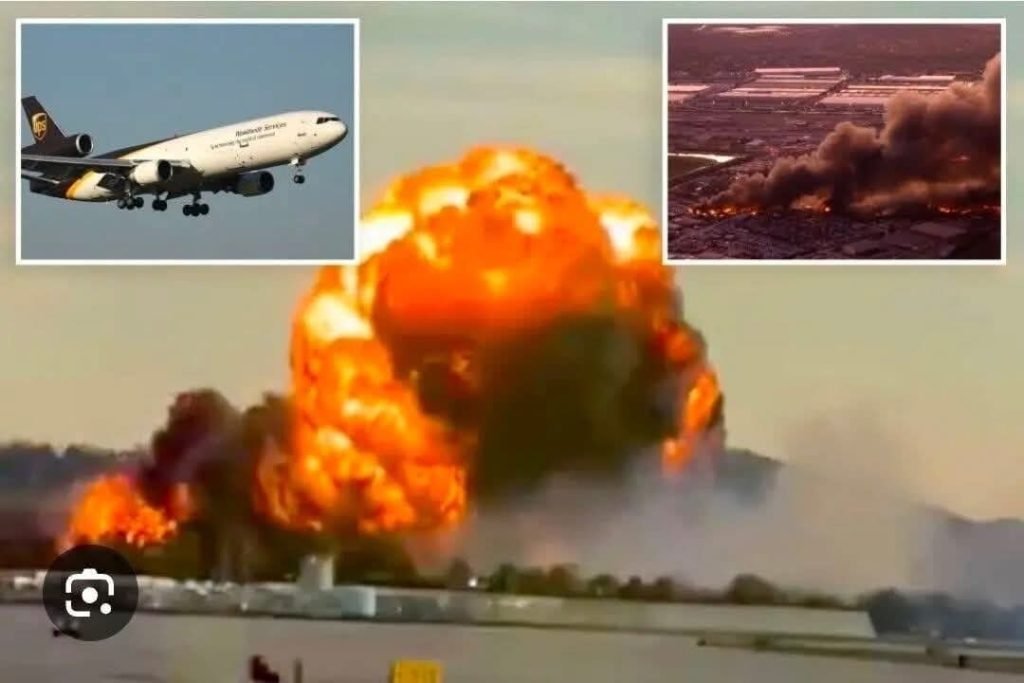
HORROR ON THE RUNWAY: Frontier Jet’s Engine Rips Apart in Fiery Blast
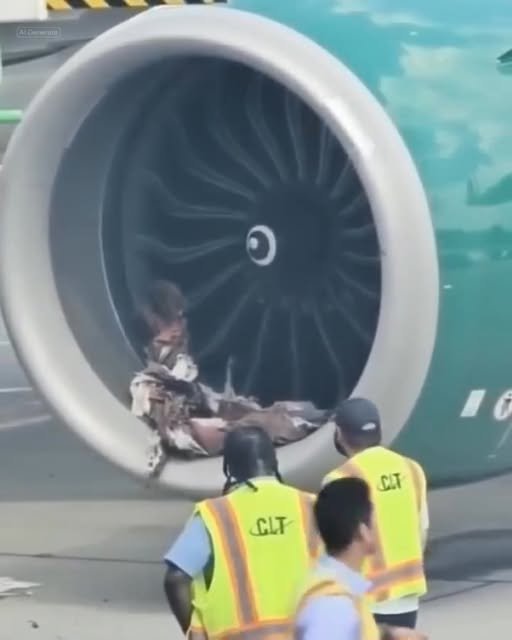
On August 16, 2025, Charlotte Douglas International Airport became the scene of a frightening aviation incident that disrupted operations and left hundreds of travelers stranded for hours. A Frontier Airlines Airbus A320, tail number N365FR, scheduled to operate Flight F9 3134 from Charlotte to New York’s LaGuardia Airport, was forced out of service after a ground air-conditioning hose was accidentally ingested into one of its engines during pre-departure preparations.

The aircraft had arrived earlier that morning from Philadelphia, touching down at approximately 10:25 a.m. as Flight F9 2387. After routine servicing at the gate, boarding began as scheduled in the early afternoon. During this process, a flexible ground-based air-conditioning hose—used to cool the cabin while the aircraft is parked—was still positioned too close to the engine inlet.
As the aircraft’s engine was powered up, the hose was suddenly sucked into the engine, triggering a violent mechanical failure. Witnesses described a loud bang followed by visible debris and smoke erupting from the engine area. Some reported seeing brief flames, while others said pieces of the hose and engine components were expelled onto the tarmac.
Airport emergency crews responded immediately. Fire suppression teams rushed to the aircraft, and the engine was shut down within seconds. All passengers had already boarded the aircraft but were safely kept on board until ground crews confirmed there was no ongoing fire risk. No injuries were reported among passengers, crew members, or airport staff.

Despite the quick response, the aircraft sustained significant engine damage and was declared non-operational. Passengers were eventually deplaned and escorted back into the terminal. Frontier Airlines arranged meal vouchers and rebooking options, but many travelers reported delays lasting up to ten hours as replacement aircraft and crews were sourced.
In a brief statement, Frontier Airlines confirmed the incident and emphasized that safety protocols worked as designed. The airline stated that the aircraft would undergo a full inspection and maintenance review before returning to service. “We regret the inconvenience to our customers and appreciate their patience,” the statement read.
Aviation experts note that while rare, such ground incidents highlight the importance of strict coordination between flight crews and ground support teams. Foreign object ingestion—commonly referred to as FOD—is a known risk during ramp operations and is taken extremely seriously within the aviation industry.

The Federal Aviation Administration has been notified and is expected to review the incident as part of standard safety oversight. Meanwhile, operations at Charlotte Douglas International Airport continued with minimal long-term disruption.
For the passengers who witnessed the event, however, the memory of the explosion and sudden chaos on the runway is unlikely to fade anytime soon.