THE SIN OF CREMATION according to the Bible says that…see more
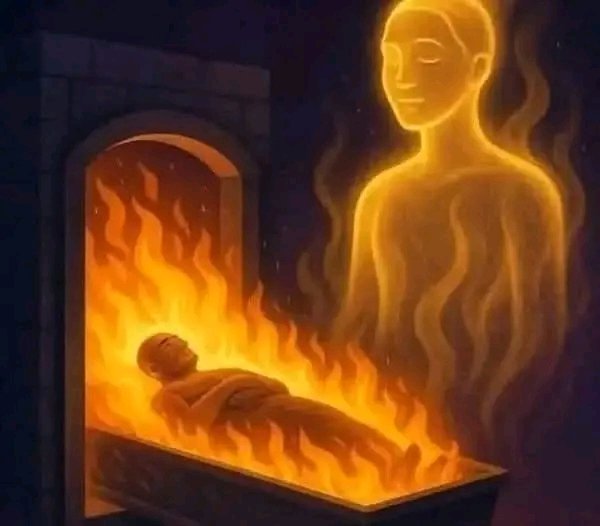
The question of whether cremation is a sin according to the Bible has been debated for generations, especially as more families today choose cremation for practical, cultural, or personal reasons. Many people grow up hearing that burial is the only “biblical” option and that cremation somehow goes against God’s will. However, when we look closely at Scripture, the issue is far more nuanced than many realize.

First, it’s important to understand that the Bible never directly commands or forbids cremation. There is no verse that says, “You must not cremate the dead.” In the Old Testament, burial was the most common practice among the Israelites, largely due to cultural customs and the climate of the region. Abraham, Sarah, Isaac, Jacob, and many others were buried in family tombs, which is why burial is often viewed as the traditional biblical method. Because burial was the norm, some people assume that cremation must therefore be sinful, but tradition alone does not equal divine command.
There are a few instances in the Bible where bodies were burned, and these are often cited in the debate. In Joshua 7, Achan and his family were burned after being executed for a serious sin. However, the burning in that passage was part of a punishment after death, not a funeral practice chosen by the family. In 1 Samuel 31, after King Saul and his sons were killed in battle and their bodies desecrated by the Philistines, the people of Jabesh-Gilead recovered the bodies and burned them before burying the bones. This act was seen as honorable, not sinful, and was done out of respect under severe circumstances.
Some Christians believe cremation is wrong because the Bible teaches physical resurrection of the body. They worry that destroying the body by fire might interfere with resurrection. Yet Scripture consistently teaches that God’s power is not limited by the condition of the human body. People who die at sea, in fires, in war, or through natural decay will still be resurrected by God’s command. Genesis 3:19 already tells us that the human body returns to dust, whether by burial or cremation. The method of returning to dust does not limit God’s ability to restore life.

The New Testament places far more emphasis on the condition of the soul than on the condition of the body after death. Salvation is based on faith in Christ, not on funeral practices. The apostle Paul teaches that believers receive glorified bodies through God’s power, not through the preservation of earthly remains. From a strictly biblical standpoint, there is no teaching that makes cremation a sin that affects a person’s salvation or standing with God.
Much of the opposition to cremation within Christianity actually developed later through church tradition, not direct biblical command. In earlier centuries, some groups opposed cremation as a reaction against pagan practices, where burning the dead was tied to non-Christian religious rituals. Over time, this created a strong cultural association between burial and Christian faith, even though the Bible itself never formally established such a rule.
Today, many Christian denominations acknowledge that cremation is a personal choice and not a sin. What matters most in Scripture is honoring God, showing respect for the dead, and living faithfully during one’s life. Funeral practices, whether burial or cremation, are seen as secondary matters of tradition, culture, and conscience.

In the end, the Bible teaches that God looks at the heart, not the method by which the body returns to dust. Cremation may challenge long-held traditions for some believers, but according to Scripture itself, it is not defined as a sin.