When doctors describe diffuse, coalescing erythematous papules and plaques on the anterior thighs and shins with sparing of the feet and ankles, that pattern alone provides an important clinical clue. The distribution often tells more of the story than the rash itself.
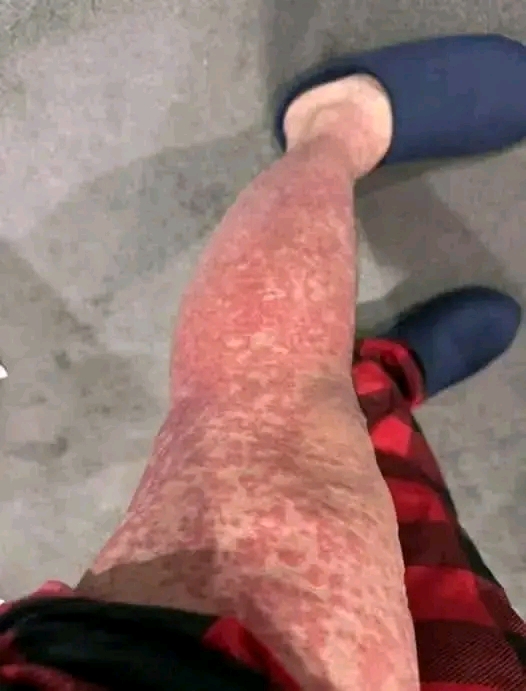
This kind of eruption usually points toward an external exposure rather than an internal illness. The fact that the feet and ankles are spared—especially areas previously covered by socks and shoes—strongly suggests that whatever triggered the reaction only affected exposed skin. In medicine, this is sometimes referred to as a “sock-sparing” pattern.
One of the most common causes is allergic contact dermatitis. This occurs when the skin reacts to something it touched, such as plants (including poison ivy or poison oak), grass, pesticides, detergents, or chemicals. If someone walked through tall grass, sat outdoors, or used a new topical product, the rash may appear exactly where the skin was uncovered. Over time, individual red bumps (papules) can merge together, forming larger inflamed patches (plaques).
Another possibility is arthropod-related reactions, such as chigger or mite bites. These insects often bite exposed areas like the thighs and shins and are blocked by tight clothing such as socks. The immune response can cause intense redness, swelling, and clustered lesions that later blend together.
Photodermatitis is another condition to consider. Some medications, plants, or skincare products can make the skin unusually sensitive to sunlight. When exposed to UV light, affected areas develop red, itchy plaques, while skin covered by clothing remains normal. This pattern is especially common during warmer months.
Infections like cellulitis are less likely when both legs are involved symmetrically and sharply spare covered areas. Similarly, autoimmune conditions usually do not respect clothing lines so precisely.
Symptoms often include itching, burning, warmth, or tenderness. Scratching can worsen inflammation and increase the risk of secondary infection. Treatment depends on the cause but may include topical corticosteroids, oral antihistamines, soothing emollients, and—most importantly—avoiding further exposure to the trigger.
Anyone experiencing a rapidly spreading rash, fever, severe pain, blistering, or signs of infection should seek medical attention promptly. A healthcare provider may recommend patch testing, a biopsy, or blood work if the diagnosis is unclear.
Ultimately, this type of rash highlights how patterns on the skin reflect what the body has encountered. Paying attention to distribution—where a rash appears and where it doesn’t—can be the key to understanding and treating it effectively.