Have you ever looked at your arms or legs in bright light and noticed small white dots that weren’t there before? Many people assume it’s just dryness or aging — but skin specialists say these marks can actually reveal important clues about your body, sun exposure, and even vitamin balance.
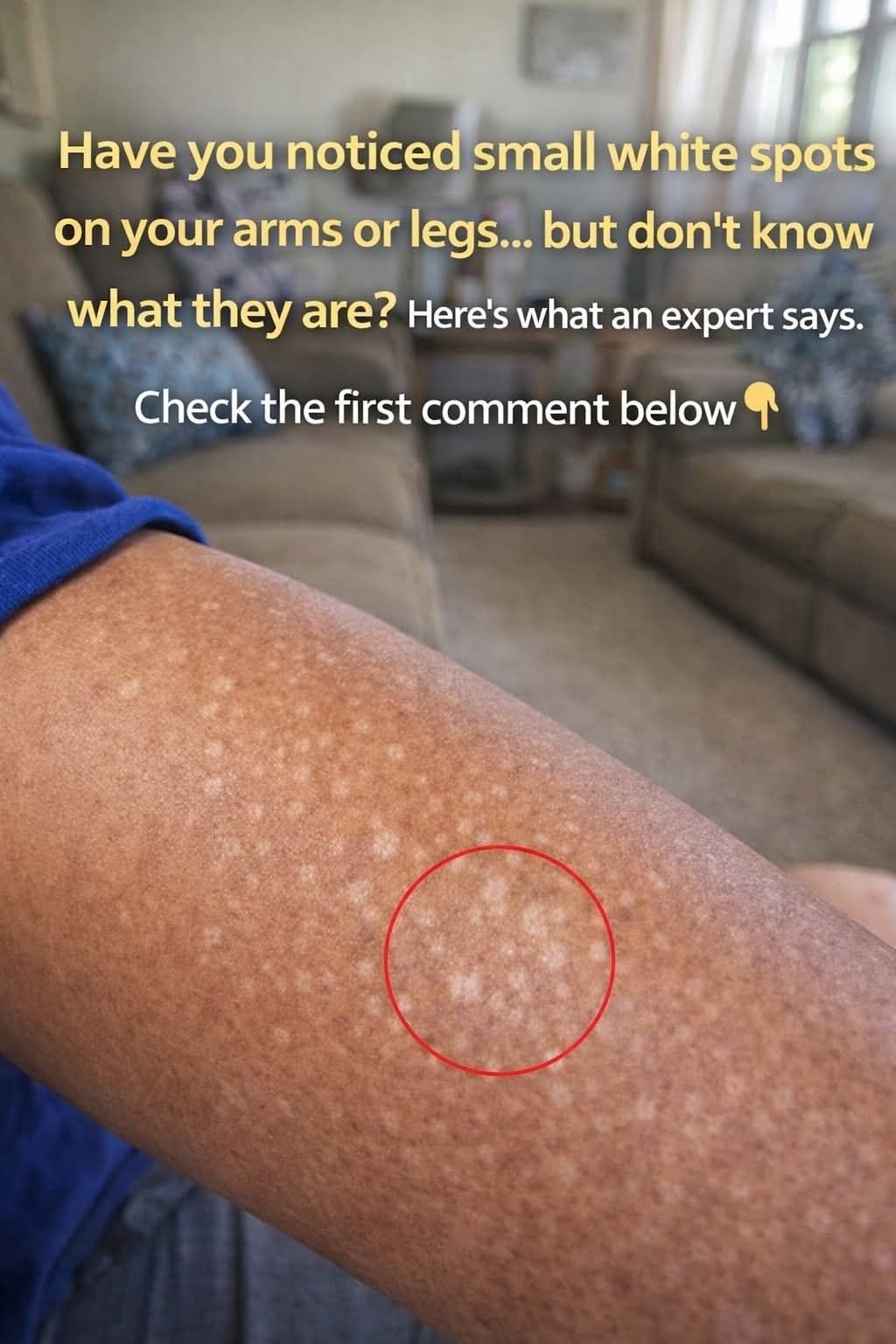
What Are These White Spots Usually?
In most cases, those little pale spots are something called Idiopathic Guttate Hypomelanosis (IGH).
It sounds serious, but it’s actually very common — especially after age 30.
They appear as: Small round or oval white patches
Smooth (not flaky or raised)
Mostly on arms, shins, and sometimes shoulders
Dermatologists explain they form when melanocytes (the cells that give skin its color) slowly stop producing pigment in certain areas.
The Main Cause: Years of Sun Exposure

The biggest trigger is cumulative sun damage.
Not sunburn — but everyday sunlight over many years.
Even if you never burned, UV rays gradually weaken pigment cells. That’s why these spots appear more on areas constantly exposed to sunlight.
In simple words:
They are like “sun freckles in reverse.”
Other Possible Reasons Doctors Check
Sometimes similar spots may be confused with other conditions, so experts look for:
Vitamin deficiencies (especially B12)
Early vitiligo (autoimmune pigment loss)
Fungal infection (if itchy or scaly)
Post-inflammation marks after bites or rashes
If the spots grow fast, spread to the face, or change texture — doctors recommend evaluation.

Can They Be Treated?
They’re harmless and don’t need treatment medically.
But cosmetically, some options may help:
Retinol creams to stimulate pigment
Mild laser therapy
Microneedling
Strict daily sunscreen (most important)
The earlier you protect your skin, the less visible new spots become.
When You Should See a Doctor
Visit a dermatologist if: Spots suddenly multiply
They appear on the face or lips
Edges look sharply defined
Skin becomes patchy instead of dotted
These signs may indicate a different condition that needs care.

The Bottom Line
Most white spots are not dangerous — they’re simply your skin’s memory of sunlight over time.
Your body isn’t malfunctioning… it’s recording exposure history.
And the best prevention is surprisingly simple:
Consistent sun protection today determines how your skin looks 10 years from now.

