Do you know why dreams like that feel different — heavier, quieter, and impossible to forget?
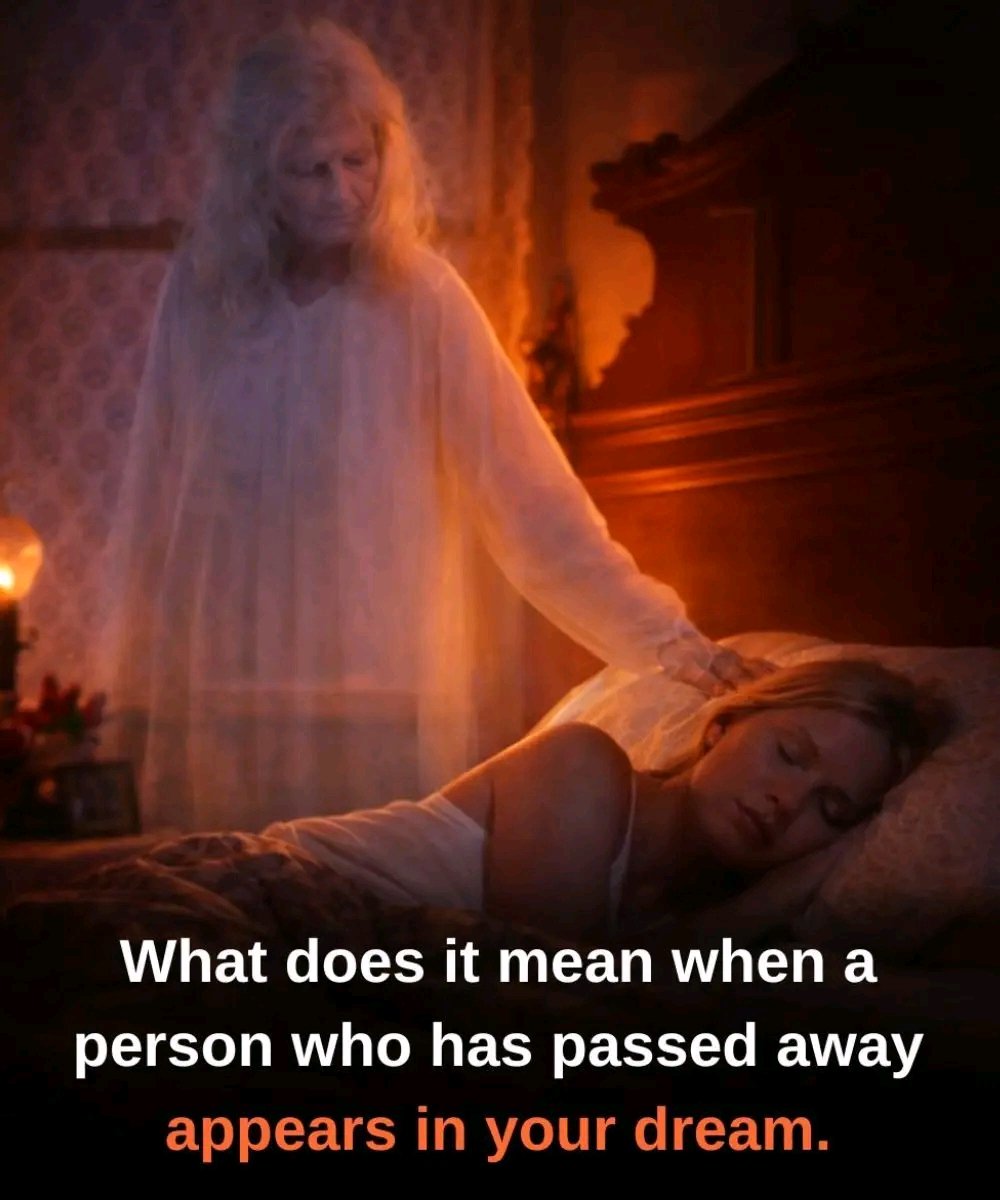
In this article, we’re talking about something that has made people stop and stare at the ceiling at 3 a.m. for centuries: dreaming of someone who has passed away. These dreams don’t feel random. They feel intentional. And whether you see them as psychological, spiritual, or emotional, they almost always mean something worth thinking about.
First, here’s the honest truth:
There is no single meaning. But there is a reason.
Often, these dreams appear during emotional transitions — grief, stress, major decisions, guilt, or unresolved feelings. The brain doesn’t process loss the way it processes other memories. When someone dies, your relationship with them doesn’t end — it changes form. Dreams are one of the few places where that relationship can still speak.

Sometimes, the person appears not to say anything. They just stand there. Look at you. Sit beside you. That silence can be the loudest part. It may reflect something unspoken between you — words never said, forgiveness not asked for, love not fully expressed. The mind uses their image to ask questions you’ve been avoiding.
Other times, they speak. And what they say often isn’t random. Psychologists note that these dreams frequently surface when you’re seeking guidance or reassurance. The person who appears is often someone you trusted, admired, or felt safe with. Your mind reaches for their voice because, at some level, you still need it.
There are also dreams that feel too real. The colors are sharper. The emotions linger all day. These usually happen when grief is suppressed rather than processed. The brain doesn’t let unresolved pain stay buried forever. It finds a way to surface — gently, or suddenly.
From a spiritual perspective, many cultures believe these dreams happen when the boundary between memory and meaning becomes thin. Not necessarily as a message from the dead — but as a moment of connection. A reminder. A reflection. A nudge to pay attention to something in your waking life.
What matters most is not who appeared — but how you felt.

Peaceful?
There may be acceptance forming.
Sad or anxious?
Something inside you still needs attention.
Comforted?
You may be remembering that you’re not as alone as you feel.
Dreams like these often appear when life is moving fast and you haven’t slowed down enough to feel what you’re carrying. The mind uses sleep to do what waking hours avoid.
So when someone who has passed away appears in your dream, don’t rush to label it as supernatural or meaningless. Sit with it. Ask yourself:

What part of me woke up with them?
What did I feel that I haven’t allowed myself to feel?
What am I being reminded of — love, regret, strength, or closure?
Some dreams are just dreams.
But some are mirrors.
And the ones that stay with you long after morning comes are usually the ones trying to tell you something about yourself, not the past.
Those dreams aren’t meant to scare you.
They’re meant to make you think.